National Day for Truth and Reconciliation
September 30 marks the National Day for Truth and Reconciliation in Canada.
It is a day to honour residential school Survivors, their families, and their communities, and to reckon with the lasting impacts of Canada’s residential school system. It is a day for listening, learning, and remembering.
For more than 160 years, an estimated 150,000 First Nations, Inuit, and Métis children were taken from their homes and sent to residential schools. The aim was assimilation: the deliberate erasure of language, culture, and identity. The last school closed in 1997.
Here on Cortes Island, Klahoose children were taken from their families and carried by steamship to the residential school in Sechelt.
The schools were run by churches on behalf of the federal government. Many were overcrowded and poorly heated. Abuse, physical, emotional, and sexual, was widespread. Many children never came home.
The trauma of residential schools is not history. It lives on in families and communities, passed down through generations. The effects of colonization ripple forward, and so does the strength of Survivors, who have carried these truths, often at great personal cost, so that others might learn them.
Today, we honour the Klahoose people and recognize the ongoing work to revitalize and strengthen cultural protocols, language and community. This year the Klahoose First Nation opened a Cultural Centre, providing a place to gather, welcome representatives from visiting Nations, hold ceremonies, and share Klahoose history, values, and traditions.
As we remember the harms of the residential school system, we also recognize the strength, resilience, and ongoing cultural revitalization of Indigenous communities.
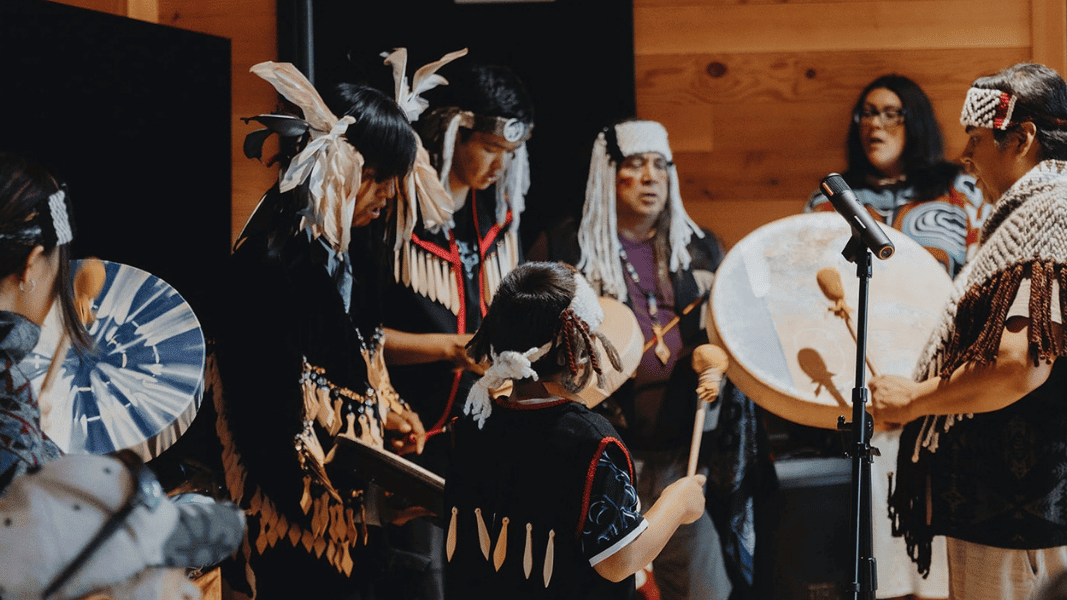
Klahoose singers and drummers at the Culture Centre opening
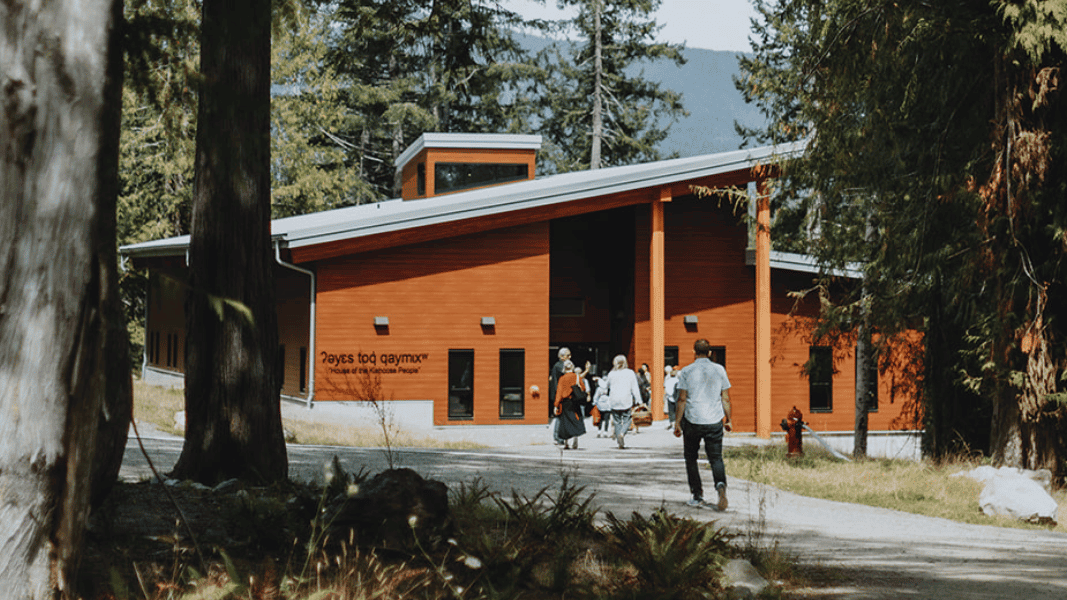
Culture Centre opening — ʔayes toq qayɛmɩxʷ (House of the Klahoose People)
Below are some resources to help you listen, learn, and honour Survivors.
- The Witness Blanket is an invitation to bear witness to the experiences of residential school Survivors. It also features impactful stories of the witness blanket. A witness listens, learns and remembers and shares with others what they have learned.
- Indian Residential School and their Legacy– A video by the Canadian Museum for Human Rights.
- Learn about the land you are on with Native Lands
- Truth and Reconciliation Commission of Canada and the 94 Calls to Action
Books:
- True Reconciliation: How to Be a Force for Change by Jody Wilson-raybould
- 21 Things you may not know about the Indian Act by Bob Joseph
- My conversations with Canadians by Lee Maracle
- Five Little Indians by Michelle Good
Local learning:
- A kid’s book, Herring to Huckleberries, written by Tla’amin author, ošil (Betty Wilson)
- Listen to Klahoose ʔayʔaǰuθəm (Ayajuthem) speakers on First Voices
- Listen to Tla’amin ʔayʔaǰuθəm speakers on First Voices
- Learn the ʔayʔaǰuθəm place names with this Tla’amin traditional place names map. Hollyhock is between 33 & 35 on the map.
- Listen to ʔayʔaǰuθəm speakers in conversation
Donate to the The Indian Residential School Survivors Society
Hollyhock’s responsibility
Steps we took in 2026… these are all small actions in a larger process of reconciliation
- Relationship with Klahoose. In honour, respect, and reciprocity with our Host Nation on Cortes Island, we provide full ride bursaries annually to members of Klahoose Nation. No application is required.
- Replenish. Each year we welcome Replenish, an Indigenous-led gathering for Elders, knowledge keepers, land and water defenders, and young change-makers from across Turtle Island and parts of the Global South, to build pathways of healing, connection, and collaboration.
- Truth and Reconciliation Gathering. Hollyhock is collaborating with the Klahoose First Nation and the Cortes Island School this week to honour Truth and Reconciliation day. Klahoose canoes will land at Hollyhock beach followed by food, song and learning.
- Land acknowledgement. This year, we worked with the ƛoʔos ʔayʔǰuθəm coordinator to update Hollyhock’s Territory Acknowledgement.
- Youth Programming. We are honoured to host and support CASE (Culture, Art, Science & Education), a gathering for local Indigenous, rural and underserved youth.
- Indigenous Scholarships. Our financial support pathways prioritize participation for people of Indigenous ancestry in recognition of long-standing inequities in access to leadership and learning spaces.

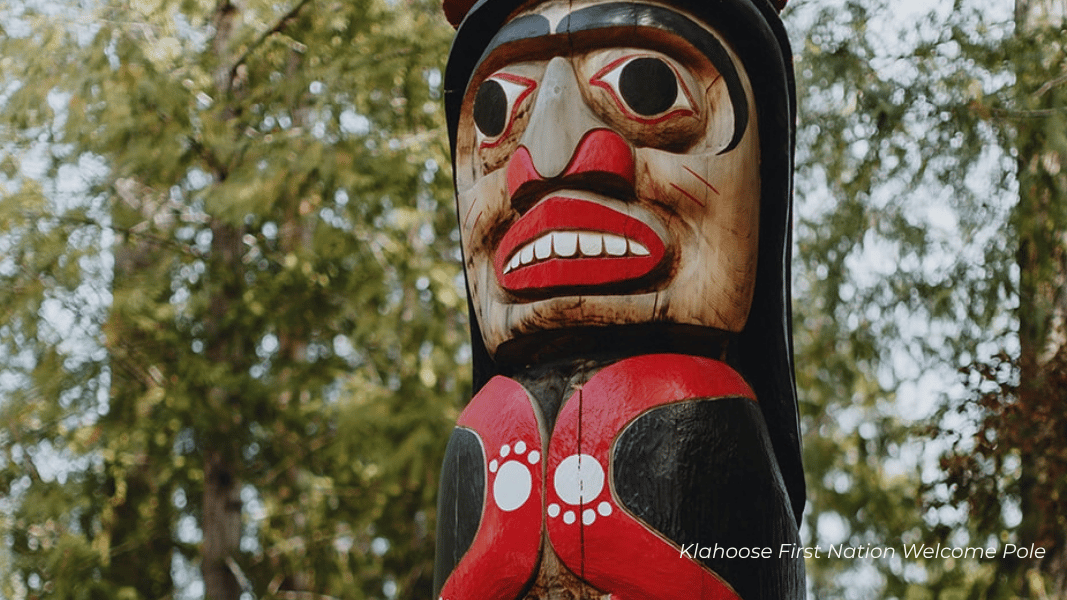
Klahoose First Nation Welcome Pole