For more than forty years, Hollyhock has been a place where people come to reconnect, with themselves, one another, and the land.
As our community evolves, so must the campus that holds these experiences.
That’s why we’re excited to share the next step in Hollyhock’s evolution: eight new hand built, thoughtfully designed, single-occupancy cabins.
Leading the design and build is Sadie Reed, Hollyhock’s Maintenance Manager. Sadie has lived on Cortes Island for decades, where she’s worked as a carpenter, designing and building many of the homes on the island. She now brings that same creativity and experience to Hollyhock’s team.
These cabins are more than new accommodations. They’re an investment in the long-term resilience of Hollyhock, our community, and the island we call home.
We are thrilled to announce an anchor partner in funding this project: Island Coastal Economic Trust.
What’s Changing?
Hollyhock is adding eight new solo-occupancy cabins to campus over the next two years, thoughtfully designed to create more space for rest, privacy, reflection, and year-round learning and gathering.
Here’s the short version: we’re not increasing how many people can be on campus at once. We’re changing the mix of rooms we offer, so more of our existing capacity can go to people who need or want a private space to stay.
Ensuring long term resilience
These cabins are also a step toward Hollyhock’s long term financial stability. Private accommodations generate steadier revenue, and that steadiness matters. As Cortes Island’s largest employer, this project will ensure more stable jobs. It supports our ability to offer living wages to staff and keeps Hollyhock financially viable for years to come.
Increasing accessibility
For many participants, a private room is not simply a preference. It can make attending a program or training possible.
Older adults, people with disabilities or health considerations, those recovering from trauma, and participants from diverse cultural backgrounds often require private accommodations to fully participate in immersive learning experiences.
As Hollyhock continues to expand access through scholarships and partnerships, offering more private accommodations is one way we can make our programs more welcoming, inclusive, and accessible.

Built with the land
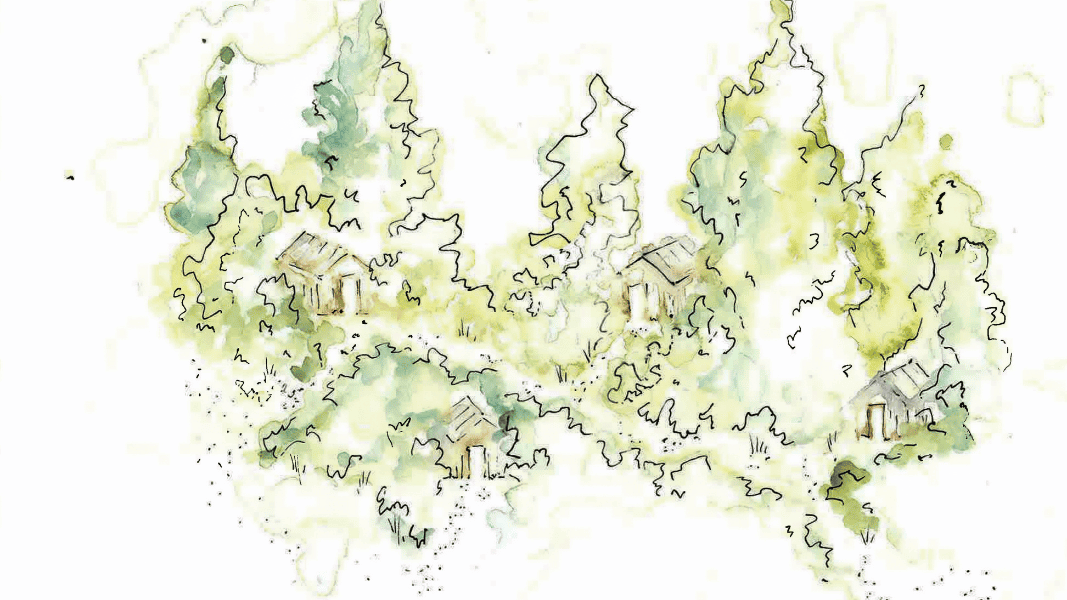
Like everything we’ve built, these cabins begin with the land. Rather than asking the forest to make room for us, we’re designing the cabins to fit gently within it, preserving mature trees and working with the existing landscape.
“It’s not just making a cabin, it’s using what I know to create an experience for somebody, to bring them into the forest, to let them be here in a way that’s not too much of a stretch, not too much of an intrusion,” says Sadie, Hollyhock’s Maintenance Manager. “I don’t want to diminish the place by putting up something that has a negative feel — something that just jumps out at you and isn’t befitting of the forest.”
“We won’t be removing very much foliage. The cabins are meant to be a part of the landscape. We will remove what we have to, just enough to make it fire-safe” Sadie added.
Supporting the local community
Where feasible, we’ll source materials close to home, including purchasing timber from Klahoose Forestry, and we’ll collaborate with local contractors, suppliers, and craftspeople. By investing locally, we strengthen regional supply chains while celebrating the knowledge and creativity that already exist on Cortes.
“We have to take down some danger trees where the cabins are located. Of course it is great firewood, but honestly, we’d love to build the cabins with the trees that have to come down. We have great millers on the island that we can work with” Sadie shared.
What’s being built
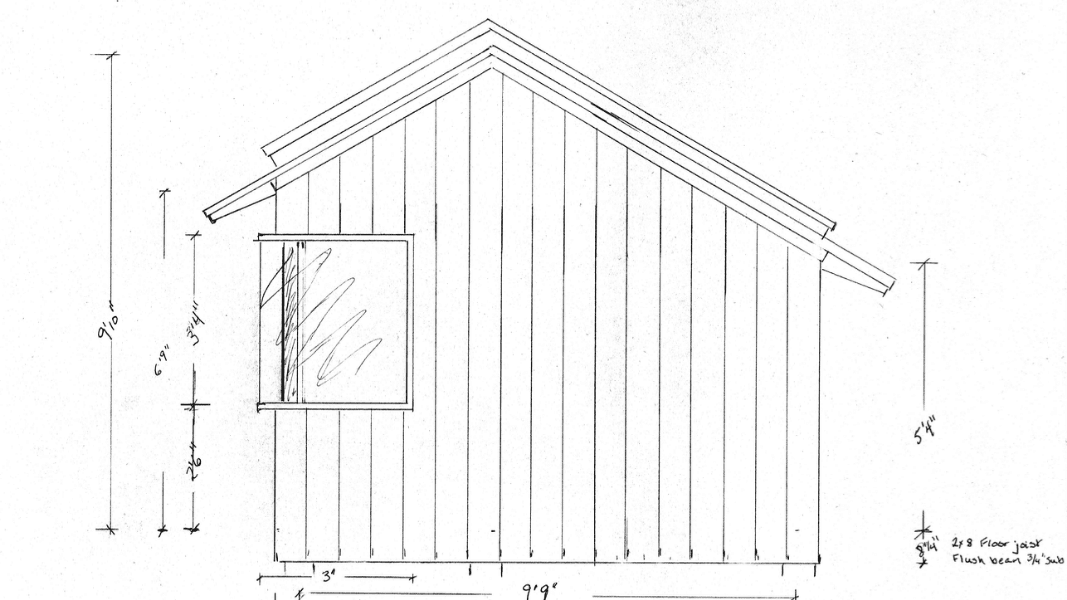
Each cabin is a small, single-occupancy sleeping cabin, sited to work around existing trees, rocks, and land features rather than clearing new ground. They’ll share the existing bathhouse at the tent site, so we’re not building new major infrastructure alongside them.
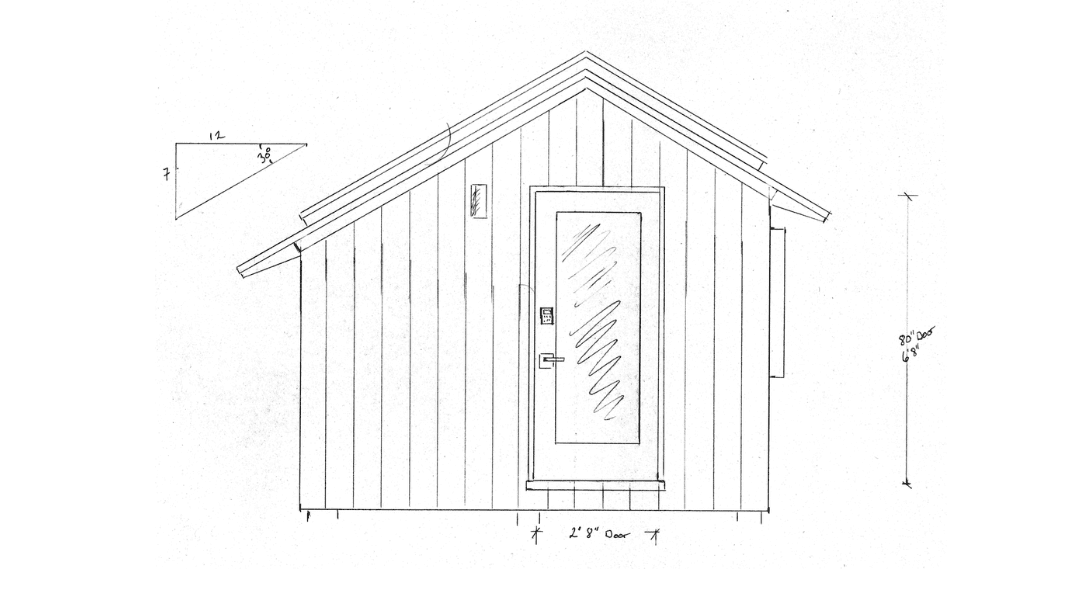
Design details carry the philosophy through, too. “The main feature of the structures is their geometry,” Sadie explains. “It’s not about a multi-faceted thing. It’s not about ornamentation. I want the lines to be very, very simple. The fascia will be made of cedar boards that will align with the cedars standing in the forest.
“The door is a portal. We have to transition when we go in and out of the cabin through a doorway. Then you come through into this cozy space with wood features, and I want somebody to just take in their experience here. In this way, you’re held in a protected space that is still very much a part of the forest. ”
Construction is planned in two phases: three cabins finished by April 2027, and five more by early 2028. Much of the build will happen off-site in the shop, then installed on location, to keep on-campus disruption as short as possible.
Stay tuned for updates!

Island Coastal Economic Trust
The Trust is investing in this project through the Capital and Innovation funding program under the Culture and Nature-Based Tourism priority area.
More information on Island Coastal Economic Trust’s website.