By Cheryl Rose
What exactly is ‘eldering’? This keyword is a big part of our exploration on Day 1 of our Hollyhock program, Eldering in Times of Transformation this October.
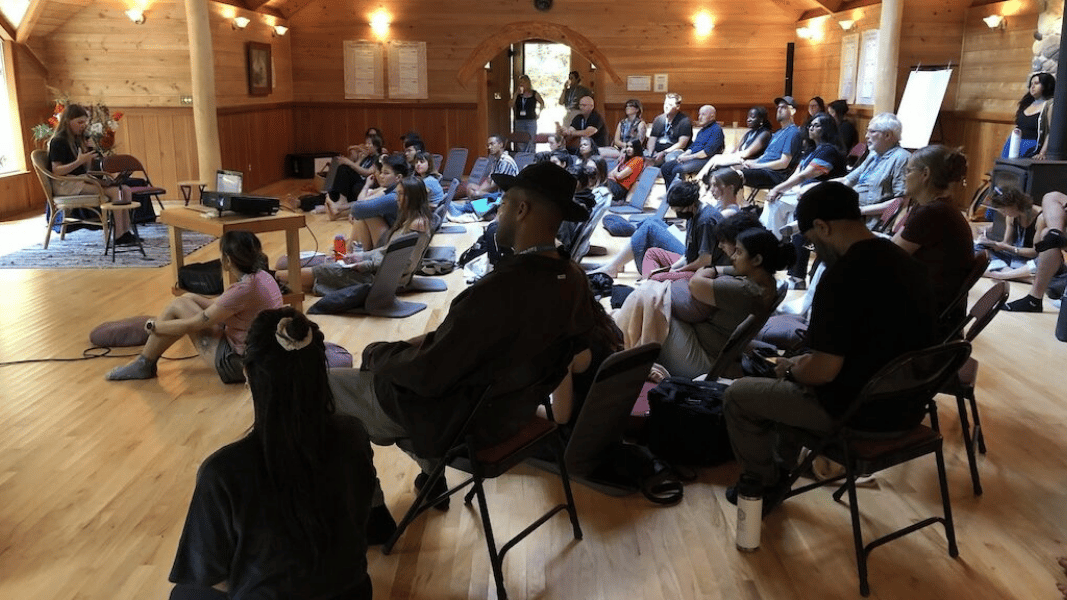
We learn a lot about what we already intuitively know by listening to each other’s stories, by really paying attention to what the natural world reveals about everything happening in the autumn season, and through creative processes that help us access our own inner wisdom.
Last year in our program, during a visualization session that my co-leader was taking us through, I had a very clear scene emerge in my mind: I was dancing with my grandfather. I recognized his face from old black-and-white photos—my mother’s father—but I had never met him. Even my mom hardly knew him because he died of tuberculosis when she was only a child. Yet there we were, the two of us—grandfather and granddaughter—dancing. Waltzing in slow circles, looking at each other, and he was smiling at me. Mostly, I remember the emotion of that dream. I woke up still holding onto the feeling of being genuinely seen and known, very safe, and deeply cared for. There were lessons for me in that dream; I was learning about eldering practice from someone who died 80 years ago.
It seems somewhat obvious that the practice of eldering has much to do with tending to relationships with the generations that follow us. But what about the generations that came before us? Alive or deceased, related or not, familiar or strangers. When I talk with others about eldering, I often ask them who they would call an elder in their own lives—and why. People usually, but not always, mention individuals older in age. Often, it’s family members, but it’s not limited to blood relations. There are stories about eldering relationships emerging from within professional fields, across organizations and teams, inside neighborhoods, rooted in communities of identity, in spiritual traditions, within social movements, grounded in the natural world, and more.
Most of us seem to know something about what “eldering” looks and feels like. Unconditional care. Deep listening. Affirmation. Encouragement. Maturity. Curiosity. Selflessness. Wisdom. Calm. Steadiness. Attentiveness. Presence. Love. These are just some of the words that come up again and again when people describe what they notice, and are grateful to receive, from eldering energy in their lives.


At the same time, lineages sometimes hold heartbreak, abuse, and trauma. As I age, I find myself often acting as a bridge between generations—the ones that came before me and the ones coming after me. For me, this generational bridging means keeping good traditions and stories alive; stewarding values and memories that support and uplift. It also includes doing all I can to break harmful cycles: processing grief and anger, and tending to my own healing work so that I can try to let go of pain, perhaps even forgive. I believe that this is a part of eldering practice, too.
It’s almost never easy work. I think that’s why I’m grateful to be meeting others who are consciously working at ways of being, thinking, and acting “like an elder.” Eldering matters to our individual lives and our shared lives. Eldering is both stewarding elements of the past and holding space for the future that is emerging.
Click here to register for Eldering in Times of Transformation with Cheryl Rose, Juana Berinstein and Zhiish McKenzie
Dates: October 2-7, 2026